Drain Field Repair in Bremerton, WA
Soggy yard, standing water, or odors over the field? We diagnose a struggling drain field and fix what we can.
Drain Field in Bremerton
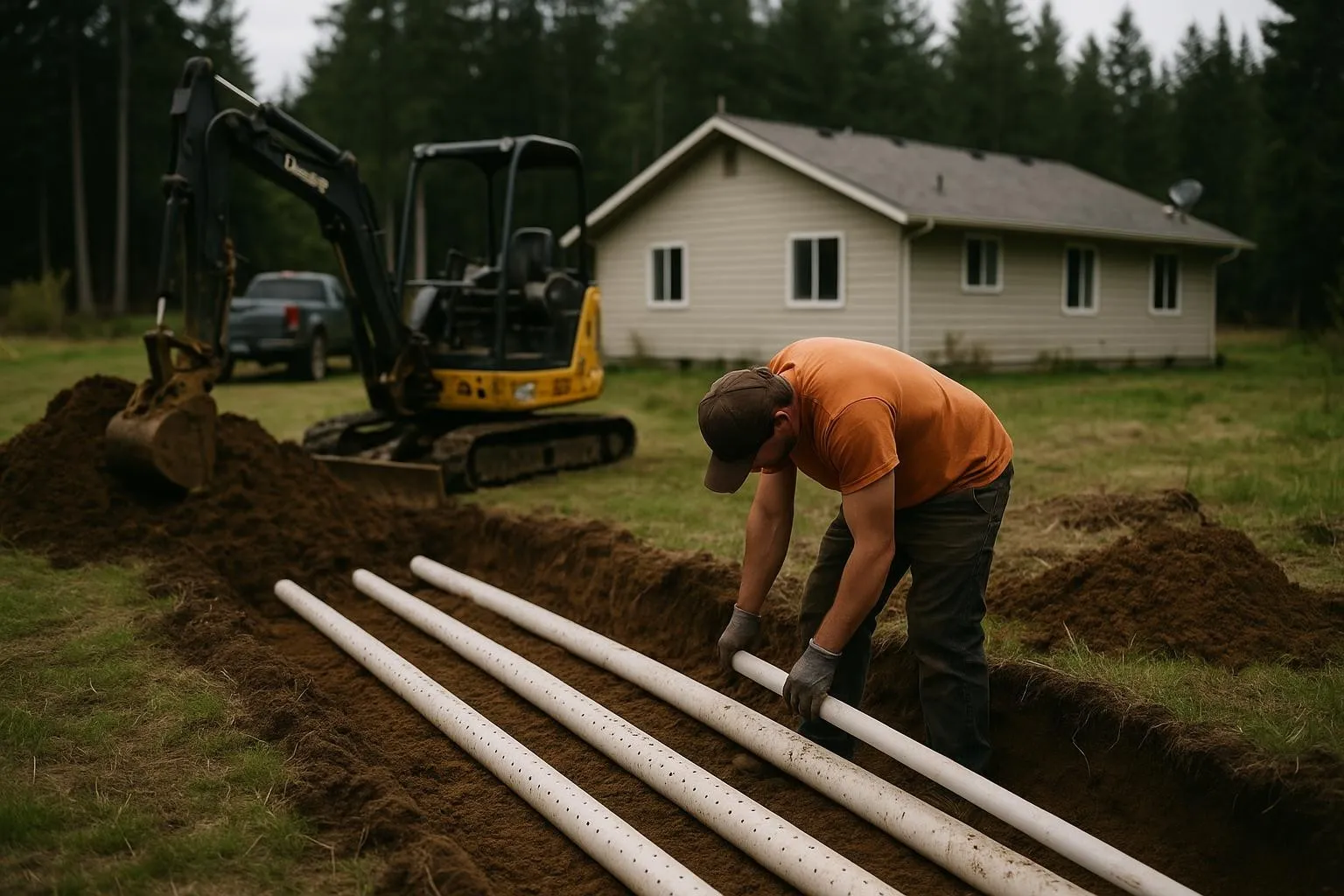
The drain field — also called the leach field — is where treated water from the tank soaks back into the ground, and it is both the most important and the most expensive part of a septic system. When a field starts to fail you see it in the yard: spongy or standing water over the lines, lush green grass in strips, sewage odor outside, slow drains in the house, and eventually backups. We diagnose and repair drain field problems across the Olympic Peninsula. A lot of field trouble is not a dead field at all — it is a tank that overflowed solids into the lines, a failed dosing pump, a crushed or root-clogged line, or simply ground already saturated from our long wet season and a high winter water table. We find the real cause, and where the field itself is the problem we repair, restore, or rebuild the failed lines rather than assuming the whole thing has to be torn out.
Septic service in Bremerton
Bremerton is the largest city in Kitsap County, wrapped around Sinclair Inlet and built around the Puget Sound Naval Shipyard, with the fast ferry running straight to downtown Seattle. The city itself is largely on sewer, but the surrounding county — East and West Bremerton’s edges, the homes around Kitsap Lake and Gorst, out toward Chico and Sunnyslope, and the shorelines of Sinclair and Dyes inlets — runs on septic. We pump, clean, repair, and inspect residential systems throughout the Bremerton area. The pattern here is a working-town mix: modest older homes on long-held lots with undersized tanks and no records, a steady flow of naval and shipyard families moving in and out, and waterfront and lakefront lots around Kitsap Lake and the inlets where shoreline setbacks and Kitsap Public Health’s O&M rules apply. Much of the ground is glacial till that drains slowly, and the long wet season keeps drain fields under pressure. The resale market stays busy, and Washington’s time-of-sale inspection rule keeps that work steady. We know the Bremerton area and how its lots and soils handle a system. Tell us where your tank is and what it is doing, and we will give you a straight answer and a real price.
- Diagnosis of standing water, odors, and soggy ground
- We rule out tank, pump, and line problems before condemning a field
- Crushed, clogged, and root-invaded lines repaired or replaced
- Distribution box checked and rebuilt for even flow
- Honest call on repair vs. rebuild — no needless tear-outs
- Guidance on keeping the field from saturating in the wet season
Need drain field elsewhere? See all of our Bremerton services or drain field across the Olympic Peninsula.
Drain Field in Bremerton
Tell us what’s happening and we’ll call you back — local Bremerton service.
Areas We Cover in Bremerton
In town or down a long driveway — if it’s in or around Bremerton, we come to your property.
- Kitsap Lake
- Gorst
- Chico
- Sunnyslope
- Rocky Point
- Erlands Point
Common Septic Issues in Bremerton
The septic problems we see most around here — and how we handle them.
Older working-town homes with no records
A lot of the Bremerton area is modest, long-held homes with septic tanks decades old and often undersized for today’s households, many with no record of the last service. Regular pumping and a look at the tank and baffles keep these older systems from washing solids into the drain field.
Shipyard turnover and busy resale
With the naval shipyard right in town, homes change hands often as families rotate through, and Washington requires a septic inspection at the time of sale. A real inspection — tank, components, and field — protects buyers and sellers and keeps the septic from holding up a closing.
Lake and inlet lots with shoreline rules
Homes around Kitsap Lake and on Sinclair and Dyes inlets sit near water, where setbacks, high groundwater, and Kitsap Public Health’s operation-and-maintenance rules govern the system. Keeping the tank pumped and the field protected is both the rule and the best way to avoid a costly failure.
Drain Field in Bremerton — FAQs
Do you cover Bremerton and the surrounding area?
I’m selling my Bremerton home — do I need a septic inspection?
How often should my tank be pumped?
There is standing water and a smell in my yard — is my drain field dead?
Can a failing drain field be saved, or does it have to be replaced?
How do I keep my drain field from failing?
Also Serving Near Bremerton
Need Drain Field in Bremerton?
Call now for a fast quote — we come to your property, and backups and emergencies get priority.